
Do You Need a Permit to Build a Deck in Asheville, NC? (2026 Guide)


Building a custom deck is one of the best ways to improve outdoor living space in Asheville and Western North Carolina. But before construction begins, many homeowners ask the same question:
Do you need a permit to build a deck in Asheville, NC?
In most cases, yes.
Permit requirements can vary depending on:
deck size
height
structural design
roof additions
location
county regulations
HOA requirements
And in mountain communities around Asheville, sloped terrain and elevation changes can make permitting even more important.
This guide breaks down what homeowners should know before starting a deck project in Buncombe County and surrounding Western North Carolina areas.
When Is a Deck Permit Required in Asheville?
In general, a permit is typically required if your deck:
is attached to the home
exceeds a certain height off the ground
includes roofing or covered structures
requires footings or structural framing
includes electrical work or lighting
adds stairs or retaining features
Most custom decks in Asheville will require permits and inspections.
This helps ensure the structure is:
safe
properly engineered
compliant with local building codes
prepared for mountain weather conditions
Why Permits Matter More in Mountain Homes
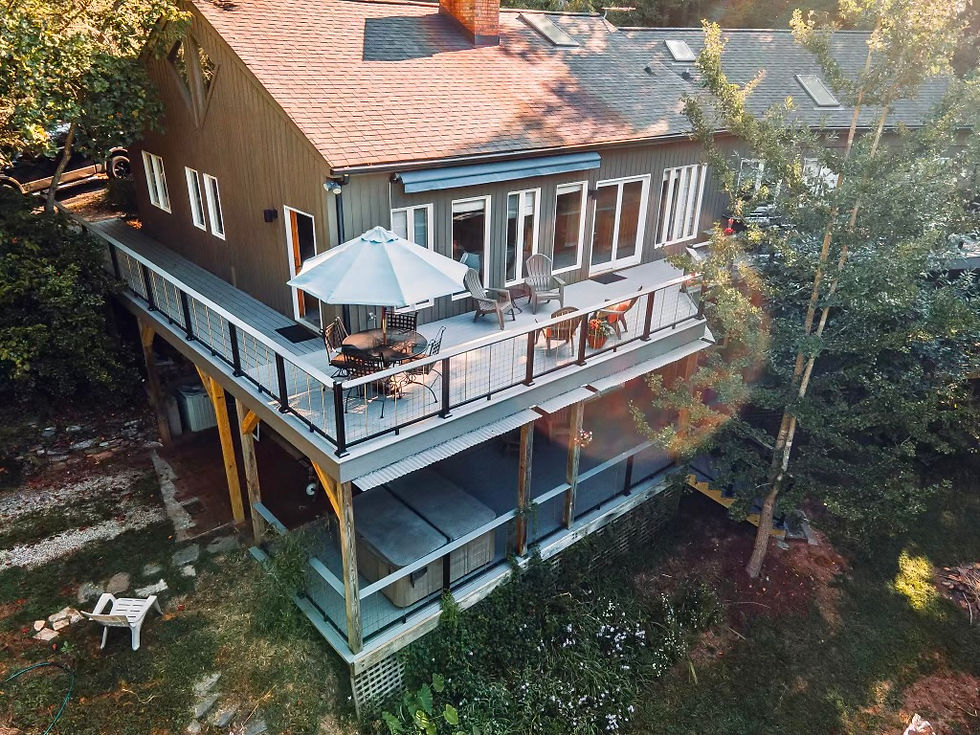
Building a deck in Western North Carolina is very different than building on flat land.
Mountain properties often involve:
steep slopes
unstable grading
drainage concerns
elevated foundations
hillside engineering
erosion management
Because of this, local inspectors pay close attention to:
footing depth
framing support
ledger attachment
railing safety
load capacity
drainage planning
Proper permitting helps protect both your investment and long-term structural integrity.
Buncombe County Deck Permit Considerations
For homeowners in Asheville and Buncombe County, permit requirements can depend on:
city vs county jurisdiction
property zoning
lot conditions
HOA regulations
floodplain considerations
setback requirements
Common items reviewed during deck permitting include:
site plans
dimensions
framing details
footing specifications
stair layouts
railing height
structural connections
If your project includes:
covered porches
screened-in spaces
outdoor fireplaces
retaining walls
roof structures
…the review process may become more detailed.
Do Detached Decks Need Permits?
Sometimes smaller detached platforms may not require full permitting, depending on:
size
height
local code requirements
However, many mountain properties still require review because of:
grading
drainage
elevation changes
safety concerns
It’s always best to verify requirements before construction begins.
What Happens If You Build Without a Permit?
Skipping permits can create major issues later, including:
failed inspections
fines
insurance complications
resale problems
delays during home sales
unsafe construction risks
Unpermitted work may also create challenges if homeowners later want to:
expand the deck
add roofing
sell the property
refinance the home
For mountain homes especially, proper structural planning is critical.
How Long Does the Permit Process Take?
Permit timelines can vary depending on:
project complexity
seasonality
county workload
engineering requirements
Simple deck permits may move quickly, while larger outdoor living projects involving:
roofing
electrical
retaining walls
hillside grading
…can require additional approvals.
Planning ahead is important, especially during busy spring and summer building seasons in Asheville.
What Homeowners Should Consider Before Building
Before starting a custom deck project, homeowners should think about:
long-term maintenance
sun exposure
drainage
mountain weather
material selection
privacy
view preservation
access points
future additions
Popular upgrades in Western North Carolina include:
composite decking
cable railings
covered porches
screened-in outdoor spaces
outdoor kitchens
integrated lighting
multi-level decks
Thoughtful planning early on helps avoid expensive changes later.
Frequently Asked Questions
Do I need a permit for a deck in Buncombe County?
In many cases, yes — especially for attached decks, elevated structures, or covered outdoor spaces.
Can I build my own deck in Asheville?
Homeowners may be allowed to build their own deck depending on local regulations, but permits and inspections may still be required.
How deep do deck footings need to be in North Carolina?
Footing requirements vary depending on soil conditions, elevation, frost depth, and structural loads.
Do covered porches require permits?
Yes. Covered porches and roof structures almost always require permitting and additional structural review.
Are inspections required during deck construction?
Most permitted deck projects require inspections during different stages of construction.
Final Thoughts
Building a custom deck in Asheville involves more than just choosing materials and design styles. Mountain terrain, weather conditions, structural safety, and local building codes all play a role in creating an outdoor space built to last.
Proper planning and permitting help ensure your project is safe, durable, and ready for years of outdoor living in Western North Carolina.
Whether you’re considering:
a custom deck
covered porch
screened-in outdoor space
multi-level mountain deck
…understanding the permitting process is an important first step.
At Ripplewood Design Co., we help homeowners throughout Asheville and Western North Carolina create outdoor living spaces designed specifically for mountain homes and mountain lifestyles.


Comments